Easy Crochet Dishcloth: Free Beginner Pattern Tutorial
These cotton dishcloths offer a scrubby, dense texture that handles everyday kitchen tasks better than thin store-bought versions. Daisy Farm Crafts brings a classic, reliable style to your home, making this an ideal project for those just starting out or anyone needing a quick, useful gift. Working through these rows helps you get comfortable with keeping your stitches even and your edges straight. You will practice the single crochet stitch while learning how to manage consistent tension throughout the entire piece. It is a satisfying way to build confidence with your hook and yarn before tackling larger blankets or garments.
Why You’ll Love This Pattern
The Classic Crochet Dishcloth is a functional staple for every kitchen, utilizing simple stitches that create a dense, absorbent texture. This project is ideal for beginners because it focuses on mastering consistent tension while working back and forth in rows. Because it uses only basic stitches, you can complete a cloth in one sitting, making it an excellent choice for a weekend gift. You only need a small amount of cotton yarn, which helps clear out those partial skeins left over from larger projects.
This pattern was the first thing I ever finished. The instructions were so clear that I felt confident moving on to more complex items right away.
— Sarah, beginner crocheter
Pattern Overview & Skill Level
- Skill Level: Beginner
- Approximate Time: 45 to 60 minutes
- Construction: Worked in flat rows
- Finished Dimensions: 8 inches by 8 inches
Materials & Supplies Needed
- Yarn: Worsted weight (#4), 100% cotton yarn, approximately 60 yards. Cotton is necessary for its absorbency and heat resistance.
- Hook Size: 5.0 mm (US H-8).
- Notions: Tapestry needle for weaving in ends, sharp scissors.
- Yarn Substitutions: Acrylic yarn is not recommended for dishcloths as it does not absorb water and may melt if used to handle hot pans. If using a cotton blend, ensure the fiber content is at least 85% cotton to maintain the intended functionality.
Stitch Guide & Abbreviations (US Terms)
- ch = chain
- st = stitch
- sc = single crochet: insert hook into stitch, yarn over, pull up a loop, yarn over, pull through both loops on hook.
- dc = double crochet: yarn over, insert hook into stitch, yarn over, pull up a loop, yarn over, pull through two loops, yarn over, pull through remaining two loops.
- turning ch = the chain made at the start of a row to reach the height of the next row.
Step-by-Step Pattern Instructions
This dishcloth uses a textured pattern known as the seed stitch, created by alternating single crochet and double crochet stitches. You will work flat, turning your work at the end of every row.
- Foundation: Chain 29.
- Row 1: Sc in the second ch from the hook, dc in the next ch. Repeat the sequence of (sc, dc) across the row until you reach the final ch. Sc in the last ch. (28 sts).
- Row 2: Ch 1 and turn. Sc in the first st, dc in the next st. Continue alternating (sc, dc) across the row. End with a sc in the final st. (28 sts).
- Rows 3 through 28: Repeat Row 2 until the piece forms a square.
- Finishing: Fasten off your yarn, leaving a 6-inch tail. Use a tapestry needle to weave the end back and forth through the stitches on the back side of the cloth to secure it firmly.
Care & Washing Instructions
- Machine wash your dishcloth in warm water on a gentle cycle to remove oils and food residue.
- Lay the cloth flat on a clean towel to air dry, as tumble drying can cause significant shrinkage.
- If the cloth loses its shape, dampen it slightly and pull the corners gently to restore the square dimensions before letting it dry.
Pro Tips & Common Mistakes to Avoid
Consistent tension is vital for a dishcloth. If your stitches are too loose, the cloth will lose its structural integrity quickly; if they are too tight, it will feel stiff rather than pliable. Use a stitch marker on the first stitch of every row if you find yourself accidentally skipping the last stitch or adding extra ones, which is a common cause of triangular edges. When weaving in your ends, ensure you go through the base of the stitches in multiple directions to prevent the yarn from unraveling during heavy use. You can easily adjust the size by chaining an odd number of stitches for the foundation; remember that a larger size will increase the total yardage required.
Frequently Asked Questions
Can I use a larger hook for this pattern?
Using a larger hook will make the fabric less dense and more prone to stretching out of shape. For dishcloths, sticking to the recommended hook size ensures the fabric remains sturdy and effective at scrubbing.
How do I know if I have the right tension?
Your stitches should be uniform in size with no large gaps between them. If you can see light through the holes between stitches, your tension is likely too loose, and you should try dropping down to a 4.5 mm hook.
Is this pattern suitable for selling at craft fairs?
You are welcome to sell finished items made from this pattern. I only ask that you credit the designer if you share the work online or in printed materials.
What should I do if I run out of yarn mid-row?
Avoid joining new yarn in the middle of a row if possible. Instead, finish the row, fasten off, and join your new yarn at the start of the next row using a secure knot, then weave in the tails immediately.
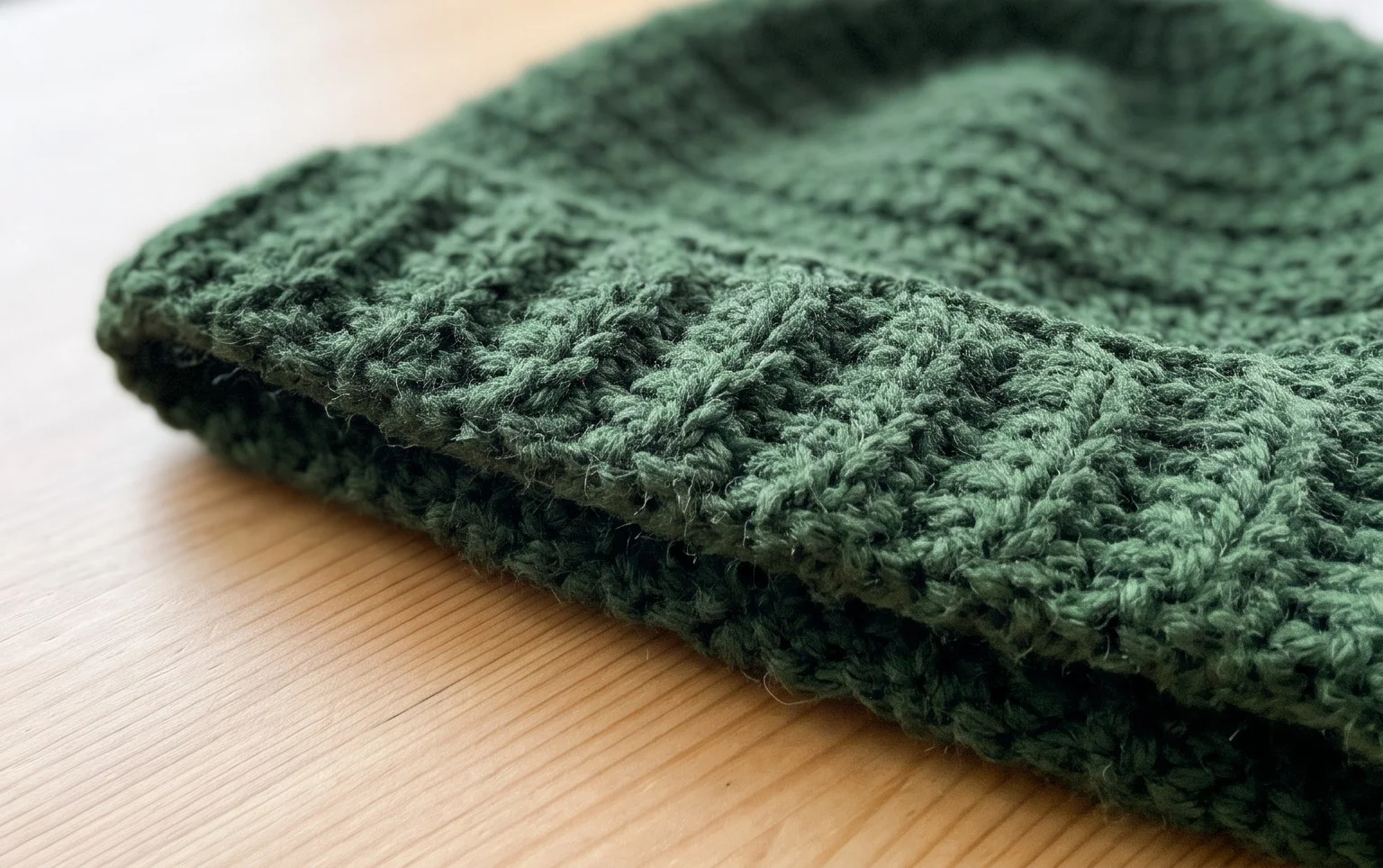
The finished square feels thick and sturdy in your hands, ready to tackle any spill on your counter. You can change the look by striping two different colors of yarn or making the cloth slightly larger for a washcloth. Sharing a photo of your work on Instagram helps others see how your specific color choices came together. Please visit the main blog index to find more projects that use these same basic techniques. Making several of these in a single afternoon gives you a collection of handmade essentials for your kitchen.